Electric Fire Truck Charging infrastructure

PowerON Energy Solutions, a leader in electrification infrastructure, was tasked with designing and deploying a bespoke charging system tailored to the fire hall’s unique requirements. This case study highlights the challenges, innovations, and outcomes of this project.

Emergency Vehicles Electrification

In 2025, the City of Victoria Fire Department welcomed the first of two electric fire trucks into service. This phased approach supports the City’s commitment to reducing its carbon footprint by electrifying or powering 80 percent of its vehicles with renewable energy by 2040.*

Challenges Encountered & Solutions

Upgrading Charging Capacity

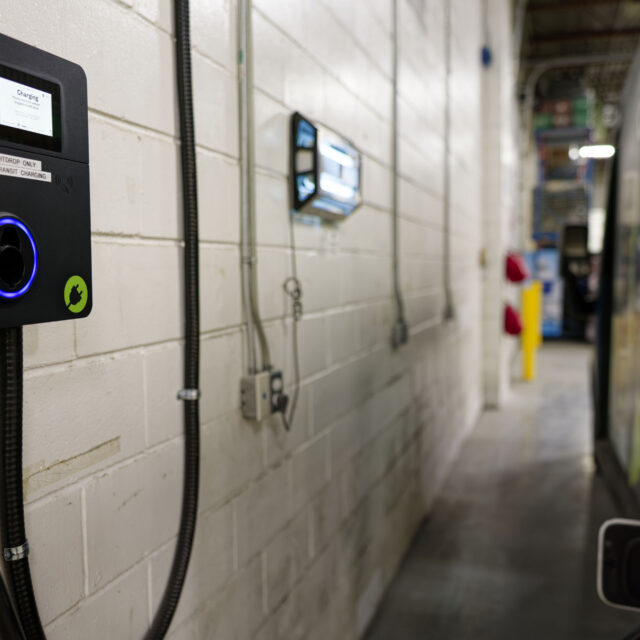
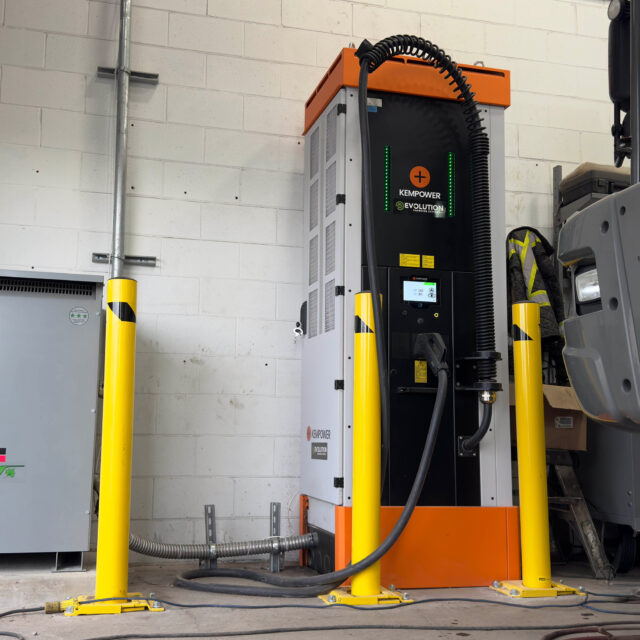
The fire hall’s existing 20 kW DC wall box charger was insufficient for rapidly charging the fire truck’s 100 kWh battery. Given the critical nature of emergency response, fire trucks must maintain constant operational readiness with minimal downtime, ensuring immediate availability for deployment. A faster, higher-powered 50 kW charger was therefore essential. During installation, the distribution panel was relocated within line-of-sight, and redundant safety disconnects were eliminated — optimizing the electrical layout and reducing both installation time and overall project cost.
Hydronic Floor Heating Constraints

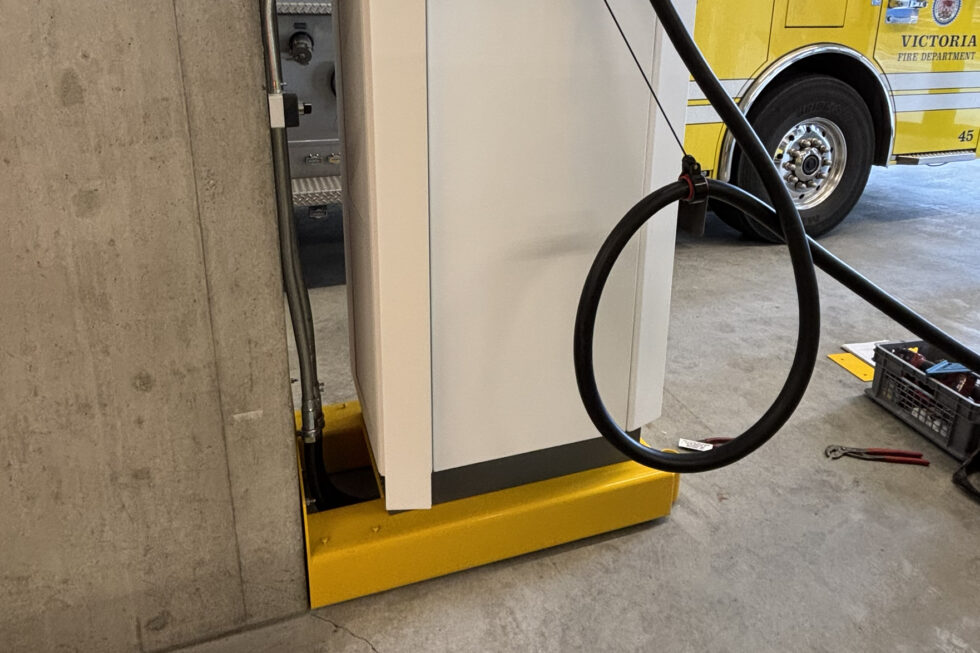
Since the facility’s hydronic floor heating system prevented equipment from being bolted to the floor, a customized skid-mounted solution was developed for a secure, non-invasive installation. The skid design not only overcame this constraint but also enabled future scalability and streamlined maintenance.

Complex Power Shutdown in a Fire Hall

Installation in an active emergency services facility necessitated careful planning and coordination to manage a complex electrical shutdown without impacting essential emergency response operations.

Custom European Vehicle Requirements

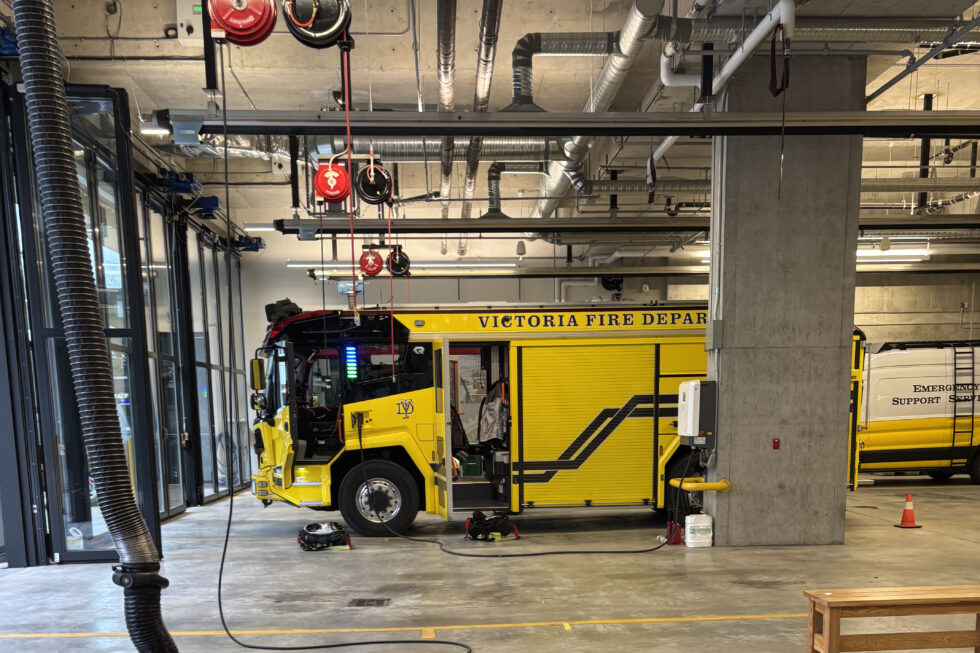
The fire truck was a custom European vehicle, requiring additional documentation of its specific charging behavior and requirements to ensure compatibility and reliability. The large vehicle size required longer charging cords to ensure flexible and easy connections without compromising operational efficiency and reducing trip hazards.

Performance and Safety Testing

A half-day commissioning process validated the system’s reliability under real-world conditions, ensuring the truck can complete 95 percent of its calls entirely in electric mode*:

  • Edge Case Simulations: Testing included scenarios such as unintended parking brake disengagement during charging and abrupt charging termination from either the vehicle or charger.
  • Safety Protocols: Automated shutdown mechanisms and fail-safes were implemented to prevent electrical hazards.

PowerON also conducted hands-on training for the fire hall’s electrical staff and operators, ensuring proficiency in charger maintenance and emergency protocols.

*https://www.victoria.ca/city-government/news/victorias-first-electric-fire-truck-arrives

Fuel Savings and Environmental Impact Assessment

88% Savings
Energy Cost

134 KG CO₂
Emissions Reduced per 100KM

50L Diesel
Displacement per 100KM

To evaluate the impact of transitioning from a conventional diesel fire truck to an electric model, we compared fuel consumption, energy costs, and emissions for 100 km of travel.

  • Diesel Displacement: A conventional fire truck consumes approximately 0.51 liters of diesel per kilometer. Over 100 km, this equals 50 liter of diesel displaced when switching to an electric fire truck with an 85 kWh battery and 100 km range.
  • Cost Savings: At a wholesale diesel price of $1.50 per litre, the diesel truck’s energy cost is $75 per 100 km. In comparison, charging the electric fire truck costs only $9.18 per 100 km at BC Hydro’s flat rate of $0.108/kWh. This results in $65.82 in savings per 100 km, making electric operation roughly 88% cheaper. (Note: BC Hydro demand charges could add ~$9.80/day depending on charging patterns.)
  • CO₂ Emissions Reduction: Diesel combustion produces approximately 2.7 kg of CO₂ per liter2. At 50 liters per 100 km, the diesel truck emits 135 kg of CO₂, while the electric truck produces 0 kg of tailpipe emissions. Even accounting for BC’s clean electricity grid (0.0115 kg CO₂e/kWh)3, the electric truck generates only ~1 kg of CO₂, resulting in a net reduction of ~134 kg of CO₂ for every 100 km driven.

1 - http://www.ohiofirechiefs.com/aws/OFCA/asset_manager/get_file/77188

2 - https://natural-resources.canada.ca/sites/nrcan/files/oee/pdf/transportation/fuel-efficient-technologies/autosmart_factsheet_9_e.pdf

3 - https://www2.gov.bc.ca/gov/content/environment/climate-change/data/electricity

Engage PowerON Early: Maximize Savings & Future-Proof Your EV Charging

Engage PowerON early in your electrification planning to maximize savings and avoid costly retrofits. With technology evolving rapidly, selecting the wrong equipment today means expensive revisions tomorrow. Our expertise ensures you choose optimal, future-ready charging solutions from day one, with infrastructure designed for seamless, cost-effective expansion as your fleet grows.

Why Choose PowerON

Continuity & Confidence

As an OPG company, with a century-long legacy, we're committed to standing beside our customers in the long run, supporting every step of the multi-year electrification transformation journey. Powering a Greener Decarbonized Fleet Future.

LET’S CONNECT

Let’s get your electric fleet ready to go.